Top Legal Issues Software Development Teams Must Address

Table of Content
What is the difference between a copyright and a patent in software development?
Why is it important to comply with software licensing agreements?
What are the key elements to include in a developer contract?
How can developers stay informed about changes in data protection regulations like GDPR and CCPA?
What strategies can help in protecting trade secrets in software development?
What are the main legal challenges in software development? From protecting intellectual property to ensuring data privacy and security, software developers face numerous legal hurdles. This article dives into the critical legal issues, specifically legal issues software development, and offers strategies to manage them effectively.
Key Takeaways
- Protecting intellectual property is crucial for software developers; understanding patents, copyrights, and trade secrets can prevent costly legal issues.
- Compliance with software licensing and data protection regulations like GDPR and CCPA is essential to mitigate legal risks and avoid penalties.
- Drafting comprehensive contracts for freelance developers and staying updated on evolving legal landscapes can ensure clear expectations and legal protection.
Protecting Intellectual Property in Software Development
In the competitive world of software development, protecting your intellectual property is paramount. Intellectual property rights are essential for software developers to prevent unauthorized exploitation of their innovations and avoid costly lawsuits. Understanding these rights not only helps in safeguarding your ideas but also ensures the company’s existence and protects users’ interests. The main types of intellectual property rights relevant to software include patents, copyrights, trade secrets, and trademarks.
Developers should implement multiple layers of protection. Startups, in particular, should prioritize intellectual property protection early to preserve their company’s value. Conducting searches and seeking legal advice before coding helps avoid infringing on existing intellectual property.
Understanding copyrights, patents, and trade secrets is key to effectively protecting your software products and the rights of copyright holders.
Understanding Copyrights and Patents
Grasping the differences between copyrights and patents is fundamental in safeguarding intellectual property in software development. Regarding patents:
- A patent is eligible for software if it introduces a novel technical solution.
- This solution must include an inventive step that is applicable for industrial use.
- Obtaining a patent involves rigorous scrutiny to ensure the invention is novel and non-obvious.
- This protection can prevent others from using, selling, or distributing your patented innovation without permission.
On the other hand, copyright law automatically covers the specific coding and design of software, protecting against unauthorized reproduction. Copyright protects the app’s source code, design, and content, differentiating it from patents which require a novel invention. Recognizing these distinctions helps developers navigate the legal landscape and safeguard their innovations.
Managing Trade Secrets
Trade secrets are vital for maintaining a competitive edge in the software industry by protecting sensitive information. Software development teams should use technical measures like encryption and secure access controls. Additionally, establishing internal policies for responsible use and sharing of proprietary information is essential.
Enforcing confidentiality agreements with employees and contractors is crucial for protecting sensitive information and ensuring transparency. Regular reviews and updates of security measures help safeguard trade secrets against emerging threats, allowing developers to protect their intellectual property and maintain market competitiveness.
Navigating Software Licensing Complexities
Software licensing is a key legal consideration that defines how software can be used and shared. Developers need to understand both proprietary and open-source licenses to navigate this complex landscape effectively. Each type of software license comes with its own set of implications for how software can be distributed and modified. Ensuring compliance with software licensing agreements is crucial to avoid legal risks and potential penalties.
Navigating different licenses can be complex, but doing so is necessary to mitigate legal issues. This section examines proprietary and open-source licenses and offers strategies for compliance.
Proprietary vs. Open-Source Licenses
Software licenses fall into two main categories: proprietary and open-source. Open-source licenses, which foster collaboration and innovation, allow modifications and sharing. Various types include permissive licenses, imposing minimal redistribution restrictions while maintaining copyright, and copyleft licenses, requiring derivative works to be distributed under the same terms.
Proprietary licenses restrict modifications and sharing, limiting software use and distribution. Effective management of open-source components is crucial for compliance and legal risk avoidance. Understanding these differences enables developers to choose appropriate licenses for their software.
Ensuring Compliance with Licensing Agreements
Compliance with licensing agreements is necessary to prevent legal disputes and avoid financial losses. Failure to comply can result in severe legal repercussions and penalties, including unauthorized use and copyright violations. Recommended strategies include:
- Regular audits
- Managing open-source components
- Consulting legal counsel
- Educating development teams
Conducting regular audits and educating development teams significantly improve compliance.
By implementing these strategies, developers can mitigate legal risks and ensure that their software products comply with all relevant licensing agreements. This proactive approach helps maintain the integrity of the development process and protects against potential legal issues.
Data Protection and Privacy Regulations
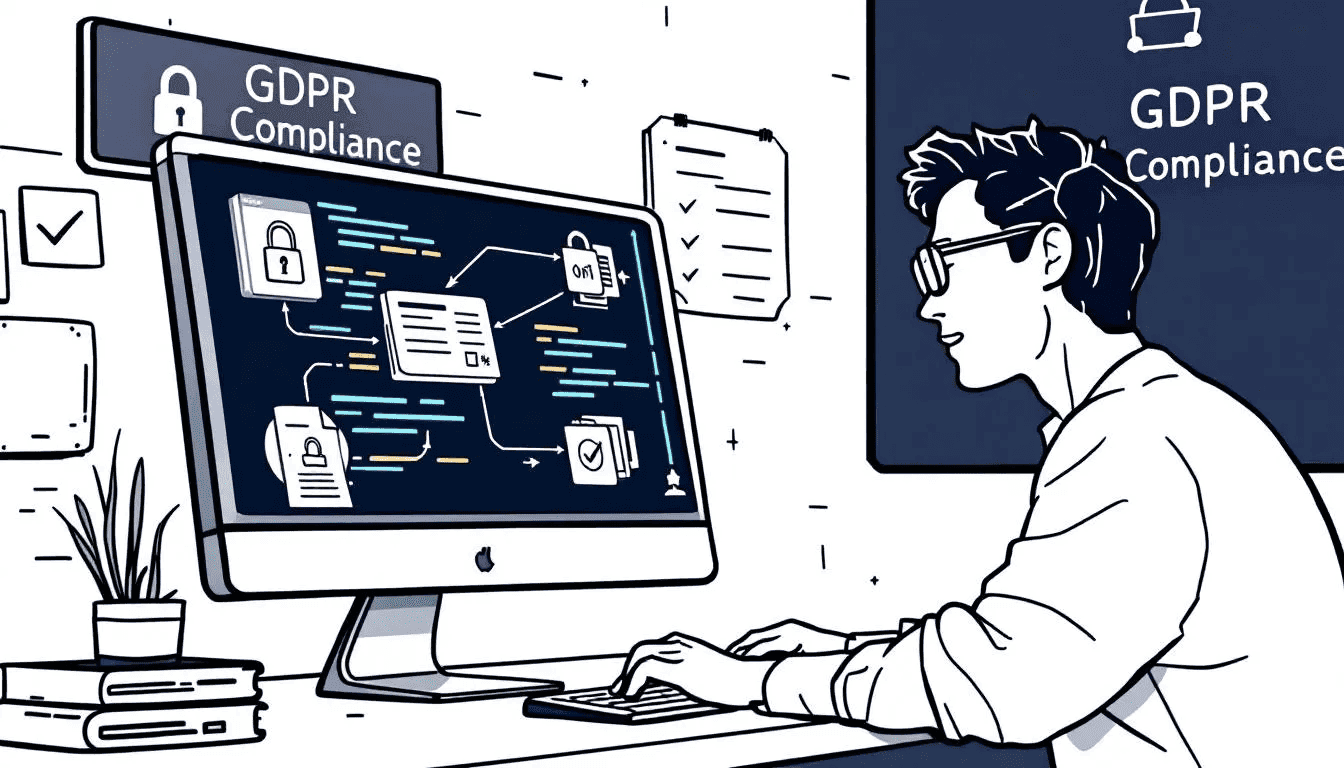
Data protection and privacy regulations are critical in today’s digital landscape. The General Data Protection Regulation (GDPR) aims to modernize laws that protect individuals’ personal data, and businesses must comply with GDPR to meet current standards for data protection. Non-compliance with GDPR can result in significant fines, making it essential for developers to understand and implement these regulations.
Similarly, the California Consumer Privacy Act (CCPA) emphasizes safeguarding user privacy. Robust security measures are necessary for legal compliance and data protection.
This section explores the requirements of GDPR and CCPA and provides strategies for ensuring compliance.
Implementing GDPR Compliance
Under GDPR, developers are required to obtain explicit consent, ensure data portability, and may need to appoint a Data Protection Officer. Establishing clear user agreements is essential before allowing app downloads from app stores to ensure users understand their rights and responsibilities, which helps build user trust. The Federal Trade Commission (FTC) requires affirmative express consent for data collection, ensuring users are well-informed.
Conducting periodic security assessments helps detect vulnerabilities before they can be exploited, maintaining compliance with GDPR. Audits should include a review of access controls to ensure only authorized users can access sensitive data, thereby ensuring ongoing compliance.
These steps help developers ensure their software complies with GDPR requirements and effectively protects user data.
Navigating CCPA Requirements
The California Consumer Privacy Act (CCPA) is a crucial regulation that developers must navigate in California. Key points include:
- Companies must clearly notify users about data collection practices.
- Unlike GDPR, CCPA does not require opt-in consent for most practices.
- CCPA mandates an opt-out option for users.
Developers can utilize the following resources to stay informed about changes in regulations:
- Legal newsletters
- Webinars
- Online services
- Legal tracking tools
By staying informed and adapting to changes in CCPA requirements, developers can ensure compliance and protect user data effectively.
Addressing Security Concerns in Software Projects
Security concerns are a major aspect of software development that cannot be overlooked. Security measures should be implemented throughout the development lifecycle to minimize vulnerabilities. Server-side input validation mitigates risks from untrusted data sources, and well-tested authentication mechanisms secure user credentials effectively.
Developers must stay updated on executive orders and governmental cybersecurity requirements to ensure compliance and protect sensitive data. This section covers secure coding practices and the importance of regular security audits to address security concerns in software projects.
Secure Coding Practices
Secure coding practices are crucial to protect sensitive data and maintain data security. Trade secrets must be actively protected and kept confidential to maintain their legal status and competitive advantage. Reverse engineering can pose a threat to trade secrets, necessitating strong protective measures.
Security audits can significantly reduce vulnerabilities and enhance overall software quality. Incorporating protective measures and regular audits ensures a secure coding environment that safeguards against unauthorized access, maintaining the integrity and security of software products.
Regular Security Audits
Regular security audits are essential in software development as they help identify vulnerabilities that could be exploited by attackers. By conducting security audits, teams can effectively mitigate potential threats, ensuring compliance with legal requirements and protecting sensitive data.
Effective security audits should assess system configurations, code reviews, and penetration testing to thoroughly examine security controls. Continuous monitoring and regular updates complement audit findings and maintain software security, ensuring compliance with legal standards.
Drafting Comprehensive Contracts for Freelance Developers
A well-drafted contract is vital for any software development project as it defines the scope and responsibilities of all parties. Freelance developer contracts are particularly important, protecting both client and developer interests, ensuring mutual benefit and risk management. Contracts clarify responsibilities and expectations, serving as legal safeguards.
Clear contracts significantly reduce misunderstandings and protect intellectual property rights, crucial for freelance developers. This section covers key elements of a developer contract and offers negotiation tips for fair and effective agreements.
Key Elements of a Developer Contract
A contract should clearly specify the scope of work to avoid ambiguity about the developer’s tasks and responsibilities. Including a clear termination clause helps parties understand the conditions for premature contract termination. A well-defined developer contract establishes clear expectations and responsibilities for both parties.
A comprehensive developer contract protects both developers and clients by addressing key elements such as work scope, deadlines, and confidentiality, ensuring smooth project execution and mutual protection.
Negotiation Tips for Developers
Negotiating contract terms ensures the agreement is fair and protects the developer’s interests. Developers should remain firm on crucial aspects like dealing with payment terms and scope to prevent future issues.
Effective negotiation helps developers enter beneficial agreements that protect their interests, preventing misunderstandings and ensuring successful project completion.
Staying Updated with Evolving Legal Landscapes
In the ever-changing legal landscape, staying updated with legal changes is crucial for ensuring compliance and mitigating risks. Understanding legal aspects enhances innovation while ensuring compliance. Navigating legal conflicts can be time-consuming and costly, affecting market launches. Combining legal knowledge with coding can significantly increase project success rates.
Incorporating legal know-how into daily operations ensures product compliance with local laws for the company and its customers in the business. Consulting legal specialists is crucial for aligning with local legal regulations when launching products internationally, as intended. This service is essential for maintaining compliance and managing cost at this point, with respect to all applicable legal standards and their consequences, including legal considerations. By doing so, companies can create a solid foundation for success while adhering to the rules and control.
This section explores strategies for utilizing legal resources and adapting to new regulations to stay compliant.
Utilizing Legal Resources
Many developers find GDPR compliance challenging due to unclear best practices. Key points to consider include:
- Sensitive data typically requires opt-in consent or options to limit use.
- Opt-in consent is not required for many data practices in the U.S.
- Compliance with regional legislation like CCPA is important to avoid financial penalties and reputational damage.
Utilizing legal resources helps developers mitigate risks and ensure compliance. An example includes:
- Legal newsletters
- Webinars
- Online forums
- Tracking tools
These resources offer valuable information and keep developers informed about regulatory changes.
Adapting to New Regulations
Developers should:
- Monitor legal changes to ensure compliance with new regulations.
- Consider laws applicable to their specific country, market, and operations.
- Prioritize secure development environments when creating software for the government, as mandated by executive orders, as a software developer.
Adapting to new regulations requires continuous monitoring of legal changes and updating internal policies and practices. Ensuring compliance helps avoid conflicts and enhances the company’s reputation by demonstrating a commitment to legal guidelines.
Summary
Navigating the complex legal landscape of software development is crucial for protecting intellectual property, ensuring compliance with licensing agreements, safeguarding user data, and maintaining security standards. By understanding and implementing these legal considerations, developers can protect their innovations, avoid costly lawsuits, and enhance the overall success of their projects.
Staying updated with evolving legal landscapes and utilizing available legal resources will help developers adapt to new regulations and mitigate potential legal risks. By taking these proactive steps, software development teams can ensure that their projects are legally sound and poised for success. Let’s embrace these legal challenges as opportunities to strengthen our projects and drive innovation forward.
Frequently Asked Questions
What is the difference between a copyright and a patent in software development?
Copyright safeguards the source code and design of software from unauthorized use, whereas a patent covers innovative and non-obvious technical solutions that offer a practical application. Understanding this distinction is crucial for protecting your intellectual property in software development.
Why is it important to comply with software licensing agreements?
Complying with software licensing agreements is essential to avoid legal disputes and financial penalties. Regular audits and legal reviews can help maintain compliance and mitigate risks.
What are the key elements to include in a developer contract?
A developer contract must include the scope of work, clear termination clauses, deadlines, confidentiality agreements, and specific responsibilities to eliminate ambiguity. Including these elements helps ensure a mutual understanding and protects both parties involved.
How can developers stay informed about changes in data protection regulations like GDPR and CCPA?
To ensure compliance with data protection regulations like GDPR and CCPA, developers should utilize legal newsletters, webinars, and legal tracking tools for continuous updates. Regularly engaging with online forums can also be beneficial for staying informed.
What strategies can help in protecting trade secrets in software development?
To effectively protect trade secrets in software development, implement technical measures such as encryption and secure access controls, alongside internal policies and confidentiality agreements. Regular security reviews are also essential to maintain robust protection.
How this article was made. Drafted with AI assistance, then fact-checked and edited by our team. Editorial responsibility: Startup Development House sp. z o.o. Read our AI content policy
Digital Transformation Strategy for Siemens Finance
Cloud-based platform for Siemens Financial Services in Poland


You may also like...

Cloud Security Compliance
A step-by-step path to SOC2, ISO 27001, GDPR, and HIPAA in the cloud — including the move to compliance-as-code for scaling safely.
Alexander Stasiak
Jun 21, 2026・10 min read
Cloud Security Compliance
A step-by-step path to SOC2, ISO 27001, GDPR, and HIPAA in the cloud — including the move to compliance-as-code for scaling safely.
Alexander Stasiak
Jun 09, 2026・10 min read

Smart Mirrors in Retail: Enhancing Shopping Experiences with Technology
Smart mirrors are transforming retail stores by offering interactive shopping experiences, virtual try-ons, and personalized recommendations. With features like augmented reality and real-time inventory integration, these technologies enhance customer engagement and streamline the in-store experience.
Alexander Stasiak
May 14, 2024・9 min read

Business Intelligence Services & Solutions
Most organisations have more data than insight, and the gap is architectural rather than analytical. This guide explains how business intelligence services and solutions turn fragmented data into a strategic asset, and how modern BI differs from traditional reporting. It reviews industry-specific applications, provides a step-by-step implementation framework, and names the pitfalls that stall BI projects. The final sections cover AI-augmented analytics and how to future-proof a data strategy.
Alexander Stasiak
Jul 15, 2026・8 min read

AI Agents for Predictive Maintenance and Asset Reliability
How autonomous agents read vibration, thermal and acoustic data to predict failures weeks ahead — and act on them without waiting for a human.
Alexander Stasiak
Aug 29, 2026・9 min read

AI Agents for Factory Workflow Optimization
How autonomous agents orchestrate the whole factory — resolving bottlenecks, scheduling maintenance and reallocating resources before output suffers.
Alexander Stasiak
Sep 28, 2026・8 min read
Recently added

How Startup House Cut Leasing Applications to 2 Minutes for Siemens Financial Services
Leasing used to mean paperwork, manual credit checks, and decisions that waited for office hours. For Siemens Financial Services Poland, Startup House replaced that with SimplyLease Online: an application customers complete in about 2 minutes and an automated credit decision delivered in about 7, at any hour. This case study shows how the platform was built within Siemens Group security standards, how it connects to Siemens systems and external data providers, and what a partnership running since 2016 has delivered. It closes with three lessons that apply to almost any financing or lending product.
Alexander Stasiak
Oct 06, 2026・5 min read

How a Cybersecurity Platform Serving Fortune 500 Clients Cut Onboarding by 95% with an AI Agent Built by Startup House
A cyber risk platform trusted by Fortune 500 companies had a familiar problem: customers respected it but opened it once a quarter, and onboarding took 45 minutes of guided setup. Startup House built Aria, an AI agent embedded inside the product, with a four-layer interface that serves board members, CFOs, and CISOs in one panel. Onboarding dropped by 95% to under 2 minutes, data exploration became fully self-serve, and the platform turned into a daily decision-support tool. This case study explains the interface, the tenant-isolation architecture, and why none of it required touching the platform's core codebase.

Marek Pałys
Oct 05, 2026・5 min read

AI and Digital Projects by Startup House: 5 Measurable Outcomes in Numbers
Claims are easy in software development, so this article sticks to numbers. It walks through five outcomes from Startup House client projects, from a 95% cut in onboarding time with an embedded AI agent to a 40% reduction in development costs for Omnipack. Each section says what kind of work produced the number and links to the public case study behind it. The closing section names three patterns these projects share, worth borrowing whether or not you work with us.
Alexander Stasiak
Oct 04, 2026・5 min read

Healthtech Software Development at Startup House: Compliance-First Projects and Results
In healthcare software, compliance is either an architecture decision or a retrofit. This article shows what designing it in from day one looks like across three Startup House projects: a sales platform for Siemens Healthineers active in more than 60 countries, a dementia care MVP shaped by 7 user testing sessions with patients and caregivers, and Doogie, a HIPAA-grade AI showcase built in 2 months. It also explains how RAG keeps clinical AI answers traceable to verified sources, and why patient data is never used to train models. For MedTech companies and health SaaS platforms, it is a practical look at what compliance-first engineering means beyond the label.
Marek Pałys
Oct 03, 2026・5 min read

Edtech Development at Startup House: What We've Built and What It Changed
EdTech platforms fail for UX reasons more often than technical ones: learners drop off, content doesn't scale, and ROI stays invisible. This article shows how Startup House avoids that with phased delivery and real user testing, using two projects as proof. Graspify went from a bold idea to a microlearning platform that trained hundreds of employees during a corporate event, and LITTLEWINE got an investor-ready scope from 10 user interviews in 2 weeks. It also covers AI learning tools that answer only from approved content and can go live in as little as 2 weeks.
Alexander Stasiak
Oct 02, 2026・5 min read

AI in Fintech: Startup House Projects, Lessons, and Outcomes
Fintech customers expect consumer-grade speed, while regulators expect bank-grade control. This article shows how Startup House has handled that tension in three projects: automated 24/7 credit decisions for Siemens Financial Services, a cyber risk platform that grew revenue 150% in a year, and a climate fintech team for CHOOOSE assembled in 2 weeks. Each project comes with the lesson it taught us. The article closes with five rules for AI in finance, from grounding every answer in verified data to designing tenant isolation into the architecture.
Marek Pałys
Oct 01, 2026・5 min read
Ready to centralize your know-how with AI?
Start a new chapter in knowledge management—where the AI Assistant becomes the central pillar of your digital support experience.
Work with a team trusted by top-tier companies.


