Understanding Custom Healthtech Software Development: A Clear Guide

Table of Content
Most healthtech solutions feel like they were made for someone else’s needs, not yours. When off-the-shelf software slows down your team or misses key features, frustration builds fast. Custom healthtech software development services offer a way to build tools that fit your exact workflow and patient care demands. This guide will show you how tailored software can make your work smoother and more effective.
Introduction to Healthtech Software

Healthtech software has become an essential companion in the modern medical world. It's more than just code; it's about improving how healthcare operates every day.
What is Healthtech Software?
Healthtech software combines technology with healthcare services. It includes applications that help manage patient records, schedule appointments, or even assist in diagnoses. Think of it as a digital assistant for medical professionals, streamlining tasks that can be time-consuming. With the right software, you can focus more on patient care and less on administrative duties.
Importance in Modern Healthcare
In today's fast-paced world, healthcare needs to keep up. Healthtech software plays a crucial role in this. It provides faster access to patient data, ensuring that you have the information you need right at your fingertips. This quick access can lead to better decision-making and, ultimately, improved patient outcomes. Most people assume healthcare is slow to change, but the truth is, it's rapidly evolving with technology at its core.
Key Components of Development

Understanding the building blocks of healthtech software is vital. Let’s explore what makes it work and why these components matter to you.
Essential Features to Consider
When developing healthtech software, certain features are key. User-friendly interfaces ensure ease of use for both medical staff and patients. Interoperability allows the system to work seamlessly with other software, which is crucial for comprehensive patient care. Imagine a system that updates patient data in real-time, reducing errors and enhancing efficiency.
Security and Compliance Concerns
Security in healthtech software isn't just a bonus; it's a necessity. Protecting patient information is critical, and complying with regulations like GDPR or HIPAA is non-negotiable. Data breaches can be costly, both financially and reputation-wise. By prioritizing security, you safeguard your practice and maintain trust with your patients.
Custom vs Off-the-Shelf Solutions
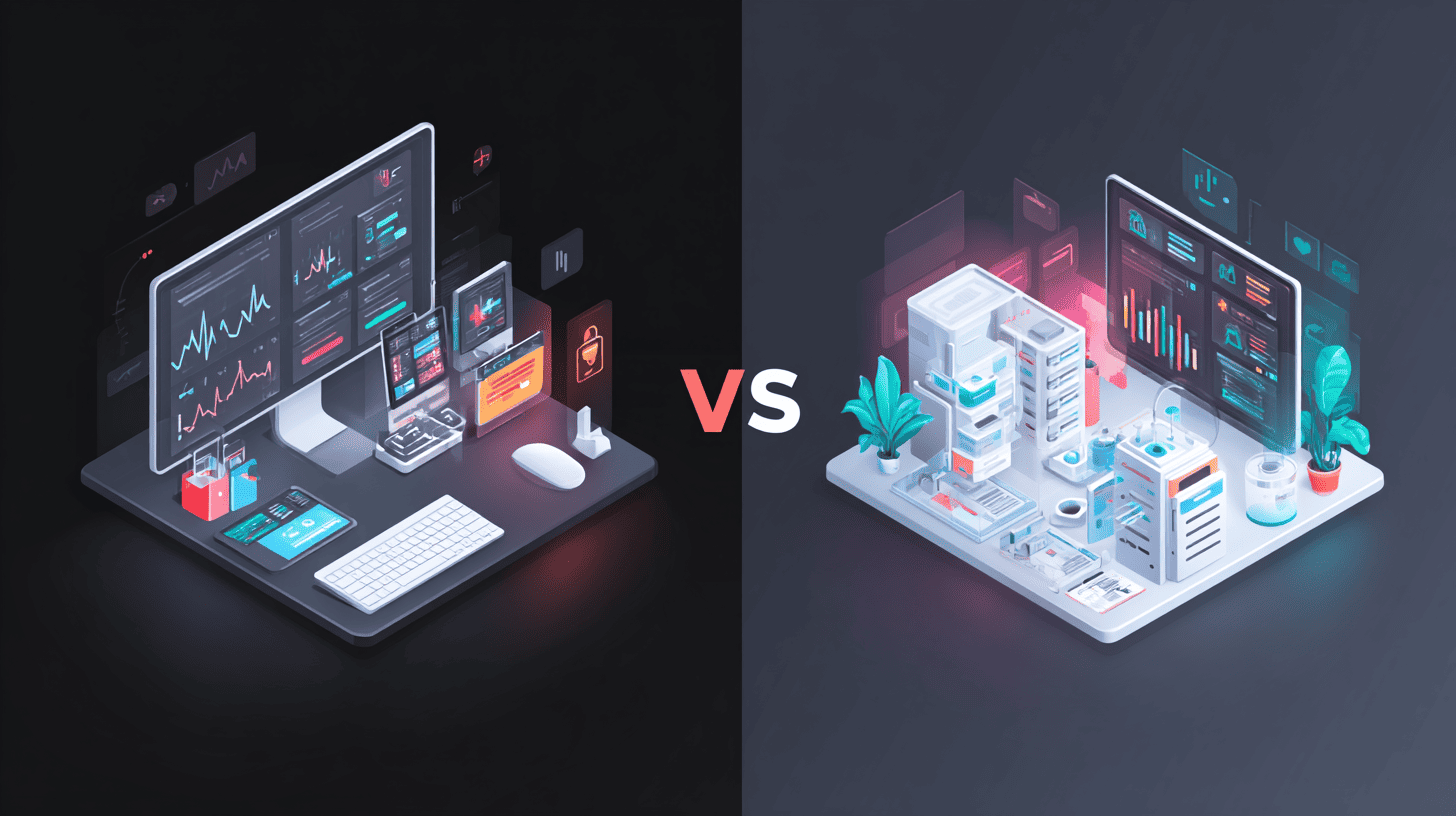
Choosing between custom and prepackaged solutions can be tough. Each has its own set of advantages and drawbacks. Let’s break it down.
Benefits of Custom Software
Custom software is designed with your specific needs in mind. It adapts to your workflow, not the other way around. This means increased productivity and fewer frustrations. Unlike generic software, custom solutions grow with your practice, allowing you to scale and evolve. The longer you wait to implement a tailored solution, the more opportunities you might miss.
Limitations of Prepackaged Software
Prepackaged software can be a quick fix, but it often lacks flexibility. These solutions typically offer a one-size-fits-all approach, which might not meet all your needs. You might find yourself trying to fit your workflow into their system, rather than the other way around. Imagine trying to fit a square peg into a round hole—frustrating and inefficient.
Development Process Overview
Creating effective healthtech software involves several key stages. Each step is crucial in delivering a product that truly meets your needs.
Planning and Requirement Gathering
The first step is understanding what you need. This involves detailed discussions about your current challenges and how software can address them. Identifying clear objectives and gathering requirements ensures the project starts on the right foot. This stage is about discovery and laying a solid foundation for development.
Design and Prototyping
Next, it's time to bring ideas to life. Design and prototyping involve creating visual representations of the software. This is where you see your vision begin to take shape. Feedback at this stage is vital, as it allows for adjustments before full-scale development begins. It’s like sketching a blueprint before building a house.
Future Trends in Healthtech

Looking ahead, healthtech is poised for exciting changes. Stay informed and be ready to adapt to new advancements.
Emerging Technologies
New technologies are constantly emerging in the healthtech world. Artificial intelligence and machine learning are becoming more prominent, offering innovative ways to enhance patient care. These technologies can analyse vast amounts of data quickly, providing insights that were previously unimaginable. Staying ahead of these trends can give you a competitive edge.
Potential Challenges and Opportunities
With new technologies come new challenges. Adapting to change can be daunting, but it also presents opportunities for growth. Embracing these changes means being prepared for potential hurdles, like integration issues or training needs. But overcoming these challenges can lead to improved services and patient satisfaction. The key insight here is to remain open-minded and adaptable.
How this article was made. Drafted with AI assistance, then fact-checked and edited by our team. Editorial responsibility: Startup Development House sp. z o.o. Read our AI content policy
Digital Transformation Strategy for Siemens Finance
Cloud-based platform for Siemens Financial Services in Poland

You may also like...

AI Agents for Patient Scheduling and Care Coordination
How autonomous agents book, reschedule and backfill appointments around the clock — cutting no-shows, closing referral leaks and freeing clinical staff.

Marek Pałys
Aug 31, 2026・10 min read

Healthtech Software Development at Startup House: Compliance-First Projects and Results
In healthcare software, compliance is either an architecture decision or a retrofit. This article shows what designing it in from day one looks like across three Startup House projects: a sales platform for Siemens Healthineers active in more than 60 countries, a dementia care MVP shaped by 7 user testing sessions with patients and caregivers, and Doogie, a HIPAA-grade AI showcase built in 2 months. It also explains how RAG keeps clinical AI answers traceable to verified sources, and why patient data is never used to train models. For MedTech companies and health SaaS platforms, it is a practical look at what compliance-first engineering means beyond the label.
Marek Pałys
Oct 03, 2026・5 min read

AI Agents for Clinical Documentation and Medical Administration
How ambient agents draft clinical notes, map billing codes and handle prior authorisation — giving clinicians back the hours the EHR takes away.
Alexander Stasiak
Sep 30, 2026・11 min read

Healthcare Crm Software Development Services
A healthcare CRM is not a generic CRM with medical labels applied, because Protected Health Information changes the entire architecture. This guide covers the core pillars of healthcare CRM development, the technical blueprint required for clinical precision, and how these systems integrate with existing clinical workflows. It examines the challenges of building custom healthcare solutions, the cooperation models available, and how to evaluate a partner. Clear comparisons against generic CRM platforms are included throughout.
Alexander Stasiak
Jul 06, 2026・6 min read

Healthcare Software Developers
HealthTech engineering succeeds or fails on standards compliance long before it competes on user experience. This guide explains what healthcare software developers actually do, spanning EHR systems, telemedicine platforms and patient engagement tools, and the competencies that make a team credible in the sector. It covers HIPAA, GDPR and HL7 FHIR requirements, the technologies shaping clinical software, and the HealthTech development lifecycle. Cooperation models, common obstacles and the business value of specialist teams are examined in turn.
Alexander Stasiak
Aug 09, 2026・9 min read

Healthcare Softwares: Types, Use Cases, and How to Choose in 2026
Healthcare software in 2026 spans EHRs, telemedicine, analytics, and AI—built to streamline workflows, improve patient outcomes, and keep data secure. This guide explains what to choose and why.
Alexander Stasiak
Feb 03, 2026・10 min read
Recently added

How Startup House Cut Leasing Applications to 2 Minutes for Siemens Financial Services
Leasing used to mean paperwork, manual credit checks, and decisions that waited for office hours. For Siemens Financial Services Poland, Startup House replaced that with SimplyLease Online: an application customers complete in about 2 minutes and an automated credit decision delivered in about 7, at any hour. This case study shows how the platform was built within Siemens Group security standards, how it connects to Siemens systems and external data providers, and what a partnership running since 2016 has delivered. It closes with three lessons that apply to almost any financing or lending product.
Alexander Stasiak
Oct 06, 2026・5 min read

How a Cybersecurity Platform Serving Fortune 500 Clients Cut Onboarding by 95% with an AI Agent Built by Startup House
A cyber risk platform trusted by Fortune 500 companies had a familiar problem: customers respected it but opened it once a quarter, and onboarding took 45 minutes of guided setup. Startup House built Aria, an AI agent embedded inside the product, with a four-layer interface that serves board members, CFOs, and CISOs in one panel. Onboarding dropped by 95% to under 2 minutes, data exploration became fully self-serve, and the platform turned into a daily decision-support tool. This case study explains the interface, the tenant-isolation architecture, and why none of it required touching the platform's core codebase.
Marek Pałys
Oct 05, 2026・5 min read

AI and Digital Projects by Startup House: 5 Measurable Outcomes in Numbers
Claims are easy in software development, so this article sticks to numbers. It walks through five outcomes from Startup House client projects, from a 95% cut in onboarding time with an embedded AI agent to a 40% reduction in development costs for Omnipack. Each section says what kind of work produced the number and links to the public case study behind it. The closing section names three patterns these projects share, worth borrowing whether or not you work with us.
Alexander Stasiak
Oct 04, 2026・5 min read
Healthtech Software Development at Startup House: Compliance-First Projects and Results
In healthcare software, compliance is either an architecture decision or a retrofit. This article shows what designing it in from day one looks like across three Startup House projects: a sales platform for Siemens Healthineers active in more than 60 countries, a dementia care MVP shaped by 7 user testing sessions with patients and caregivers, and Doogie, a HIPAA-grade AI showcase built in 2 months. It also explains how RAG keeps clinical AI answers traceable to verified sources, and why patient data is never used to train models. For MedTech companies and health SaaS platforms, it is a practical look at what compliance-first engineering means beyond the label.
Marek Pałys
Oct 03, 2026・5 min read

Edtech Development at Startup House: What We've Built and What It Changed
EdTech platforms fail for UX reasons more often than technical ones: learners drop off, content doesn't scale, and ROI stays invisible. This article shows how Startup House avoids that with phased delivery and real user testing, using two projects as proof. Graspify went from a bold idea to a microlearning platform that trained hundreds of employees during a corporate event, and LITTLEWINE got an investor-ready scope from 10 user interviews in 2 weeks. It also covers AI learning tools that answer only from approved content and can go live in as little as 2 weeks.
Alexander Stasiak
Oct 02, 2026・5 min read

AI in Fintech: Startup House Projects, Lessons, and Outcomes
Fintech customers expect consumer-grade speed, while regulators expect bank-grade control. This article shows how Startup House has handled that tension in three projects: automated 24/7 credit decisions for Siemens Financial Services, a cyber risk platform that grew revenue 150% in a year, and a climate fintech team for CHOOOSE assembled in 2 weeks. Each project comes with the lesson it taught us. The article closes with five rules for AI in finance, from grounding every answer in verified data to designing tenant isolation into the architecture.
Marek Pałys
Oct 01, 2026・5 min read
Ready to centralize your know-how with AI?
Start a new chapter in knowledge management—where the AI Assistant becomes the central pillar of your digital support experience.
Work with a team trusted by top-tier companies.


